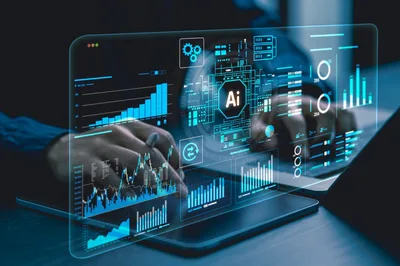
Is AI an Investment Bubble? What History Tells Us
Investors are questioning whether the AI boom mirrors past market bubbles. Historical patterns offer cautionary but nuanced lessons.
The rapid surge in artificial intelligence-related stocks has rekindled a familiar debate on Wall Street: are investors witnessing the birth of a transformative era, or inflating another dangerous bubble destined to burst? The question carries real weight as valuations for AI-linked companies have climbed sharply in a relatively short period.
History offers a mixed verdict. Past technology-driven manias — from the railroad boom of the 19th century to the dot-com frenzy of the late 1990s — share a recognizable pattern: genuine innovation arrives, capital floods in, valuations detach from near-term fundamentals, and a correction eventually follows. Yet the underlying technologies often survived the bust and reshaped the economy for decades afterward.
Read more Jim Cramer Advises Against Redwire Stock in Rate Tightening Era →
The dot-com parallel is the most frequently cited. Many companies from that era collapsed entirely, but survivors such as Amazon and Google went on to become among the most valuable enterprises in history. The lesson analysts draw is that the technology itself need not be a mirage for investors to suffer significant losses if they enter at peak valuations.
What distinguishes the current AI moment, proponents argue, is that major revenue generation is already occurring — something dot-com-era startups frequently lacked. Large enterprise adoption, cloud-infrastructure spending, and integration into existing software products suggest a faster path to monetization than prior cycles. Skeptics counter that expectations may still be running well ahead of what AI can realistically deliver in the near term, leaving little margin for disappointment.
For individual investors, the historical record suggests caution around concentration in the highest-multiple names while acknowledging that dismissing the technology entirely also carries risk. Diversification across the AI supply chain — semiconductors, cloud platforms, and software — has been a commonly cited approach to managing uncertainty without sitting out the cycle entirely. Continue reading at Yahoo Finance.